A government that reliably delivers outcomes in a fast-changing world
Getting there means changing how government works at the most basic level: moving from an operating model built for the industrial era to one built for the age of AI.
Outcomes depend on fixing a broken government operating model
Policymakers, the public, and philanthropies focus on the top of the pyramid: outcomes in areas like housing, public safety, education, and national security. When a policy fails, the usual response is to try a different policy. But even well-designed policy fails when the foundation beneath it is weak, and a government that can't learn and adapt rarely designs good policy in the first place.
A government that reliably delivers outcomes needs:
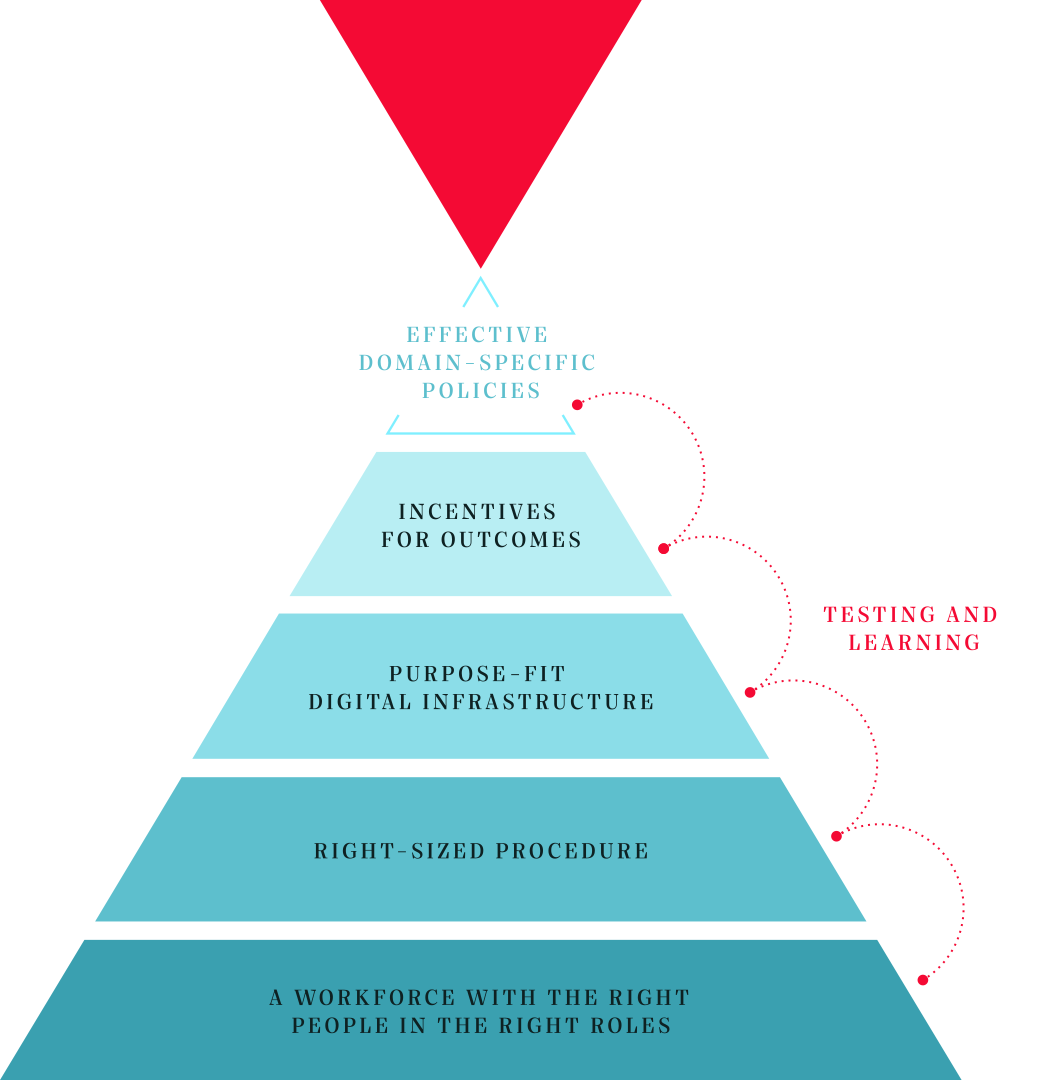
These are the four foundational competencies of a modern operating model that enable government to test, learn, and adapt to an ever-changing world. Get them right and better outcomes follow. Ignore them and government keeps churning at the top.
Go deeper on the operating model and each competency →Federal and state reform:
a reinforcing cycle
This operating model has to take hold across government, and the fastest path runs through the federal and state governments, drawing inspiration from one another.
“[A] single courageous State may, if its citizens choose, serve as a laboratory; and try novel social and economic experiments without risk to the rest of the country.”
“There is no equivalent 50-state network focused on nonpartisan improvements to state governance.”
States learn from one another. Lessons travel from early-adopter states upward to the federal level and back down again. Progress at one level reinforces the other — when the field is organized to make that happen.
We're aiming at structural change to the operating model at federal and state levels
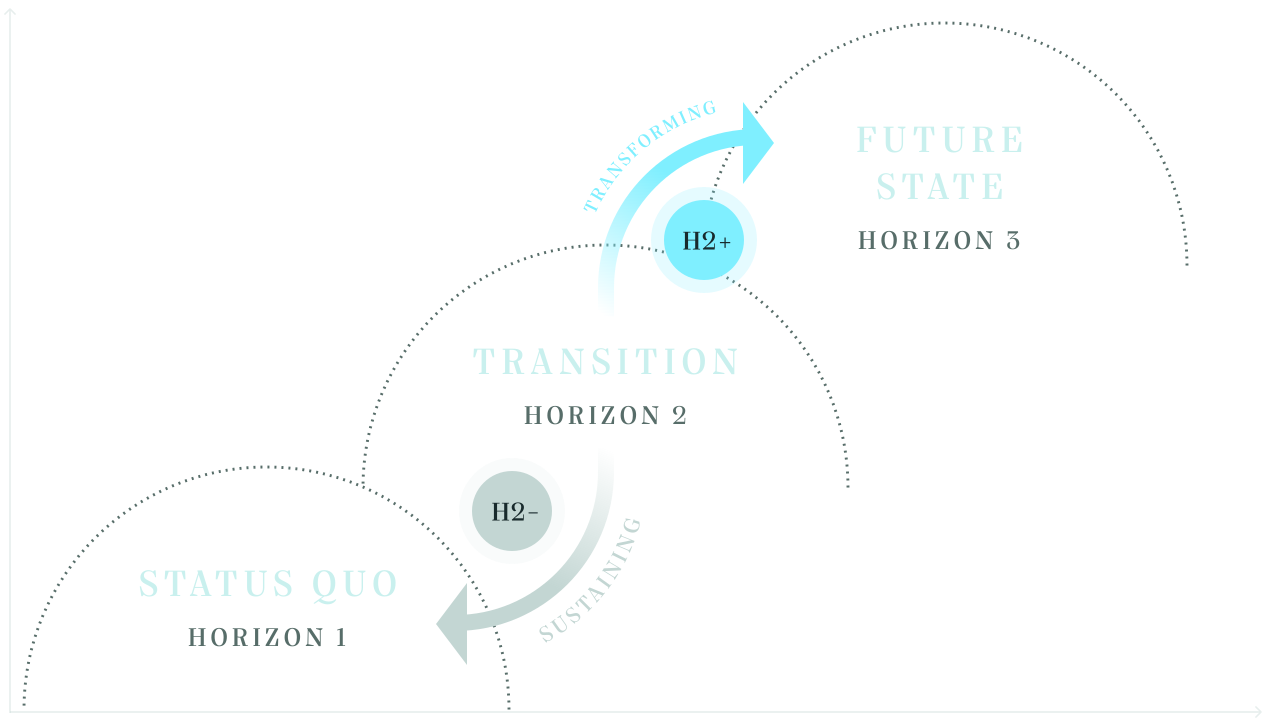
For decades, the working theory of government reform has been incremental improvement off a poor baseline. It hasn't produced a government that can keep up, and the system is running out of time to adapt.
As our co-founder, Jen Pahlka, has written,
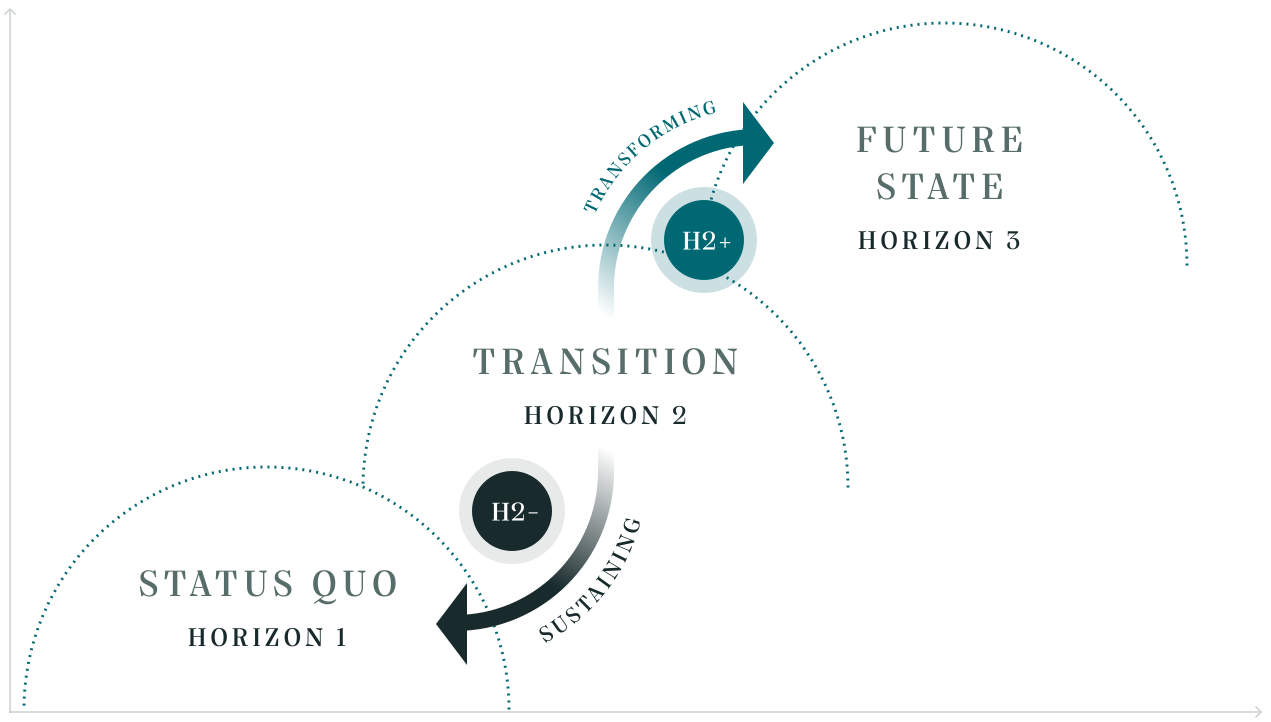
reformers are faced with three horizons:
Horizon 1
is today's system: functional enough to persist, but failing in ways that fall hardest on the people with the least power.
Horizon 2
is the turbulent middle, where change agents actually work.
Horizon 3
is the system we're working toward, visible today only in patches: one that reliably delivers and keeps adapting as the world changes.
Not all of that middle work in Horizon 2 is the same. Some of it creates the conditions for a new system to emerge. Other work, however inadvertently, extends the lifespan of the failing one. Both feel like reform, but they have very different long-term consequences.
Propping up a brittle system doesn't save it. It means the system fails later, and more spectacularly, and every time it fails more people get hurt and more people start looking for alternatives to democracy itself.
Our ambition is the harder kind:
work that moves the system toward what comes next.
Ambition this big takes a strong field
It's bigger than any one organization. It depends on a whole field of actors pushing in the same direction: civil society groups building better models of government, researchers figuring out what works, technologists building the tools a modern government needs, and public servants driving reform from inside agencies and legislatures.
There's no membership list. What defines the field is a shared goal, and a belief that the path runs across ideological lines.


Resources
Sufficient and sustainable resources critical to supporting field actors and enabling them to build and maintain strong organizational health
Infrastructure
Adaptive field infrastructure – the connective tissue to make the field more connected, coordinated, and effective
Public Sector Systems
Field actors leverage their understanding of and relationships in government to exert significant influence over government (policies, funding flow, etc.), reflecting government leaders’ and their constituents’ acceptance of the field-level agenda
Knowledge Base
A credible, robust, and evolving academic and practical knowledge base that informs and acts as a credible reference point for the field’s strategy
Field-Level Agenda
Alignment around a clear and dynamic field-level agenda that is co-created by diverse stakeholders within the field
Actors
Diverse and complementary actors that share a common vision, are committed to working effectively together, and are able to individually build strong organizational health
Today, the state capacity field is still nascent. Talented organizations are doing real and important work, but shared identity is thin, connective tissue is weak, and resources are the binding constraint that limits collective action toward ambitious reform.