The operating model, competency by competency

Most governments run as an open loop: policy flows one way, with little room to learn and adjust. Orders cascade down. Procedures prove compliance. Policy locks in at passage. Risk gets avoided. Oversight looks for blame. A government that reliably delivers outcomes closes that loop, so it can test, learn, and adapt as the world changes.

Closing it depends on four competencies. They aren’t a checklist — they reinforce each other, and the new operating model emerges faster when those connections are put to work. Fixing how government hires makes it possible to run technology as an ongoing product. Cutting procedural bloat speeds up hiring. Oversight that rewards outcomes gives teams room to build better technology. Progress on one competency can unlock the others.

Further reading: The How We Need Now (Niskanen Center) →
The operating model

Outcomes depend on fixing a broken government operating model

Policymakers, the public, and philanthropies focus on the top of the pyramid: outcomes in areas like housing, public safety, education, and national security. When a policy fails, the usual response is to try a different policy. But even well-designed policy fails when the foundation beneath it is weak, and a government that can't learn and adapt rarely designs good policy in the first place.

A government that reliably delivers outcomes needs:
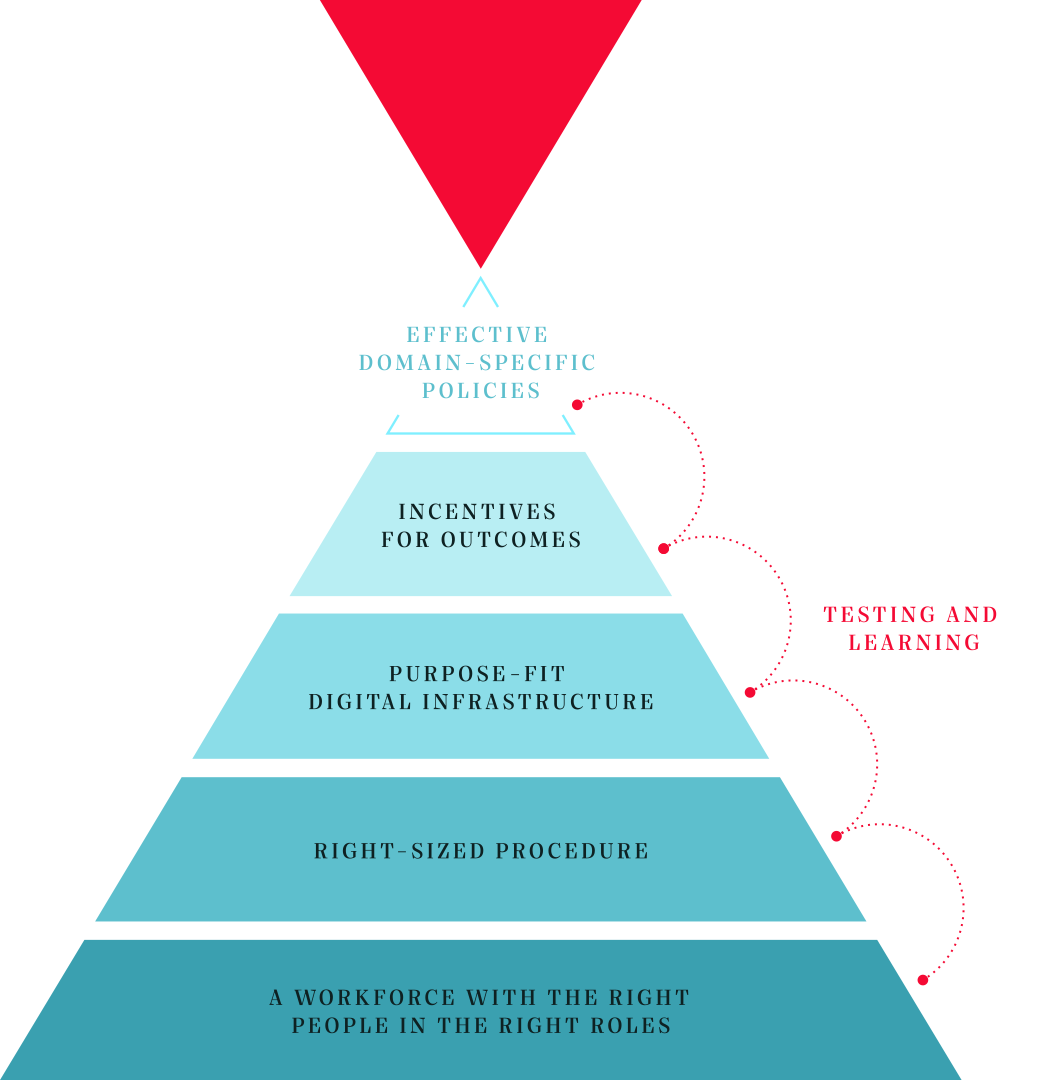
The operating-model pyramid — outcomes rest on four foundational competencies

These are the four foundational competencies of a modern operating model that enable government to test, learn, and adapt to an ever-changing world. Get them right and better outcomes follow. Ignore them and government keeps churning at the top.

01

A workforce with the right people in the right roles

+

America’s civil service was built for the industrial era. It can’t hire quickly or well, struggles to manage performance, and rarely moves people out of roles they aren’t suited for. The result is chronic vacancies, talent lost to the private sector, and skills that lag years behind what the work requires. Strengthening this competency means reforming how government classifies, pays, hires, develops, and holds people accountable — so the right people can do the right work and be rewarded for results, and so the workforce is ready for a world where AI raises both the demands on government and the public’s expectations of it.

Examples of our efforts to strengthen this competency

See more of our Portfolio →

Further readingClassification Rules Everything Around Me (Niskanen Center)Personnel Is Policy (Foundation for American Innovation)Fixing Government Hiring (The States Forum)A Civil Service for the Mission (Vanderbilt Policy Accelerator)A pre-mortem on OPM’s HR 2.0 initiative: Imagining failure in order to support success (FAS & Niskanen Center)

02

Right-sized procedure

+

Government has accumulated decades of overlapping process requirements, some real and some only assumed. Much of it began as well-intentioned efforts to protect values like public input and environmental review, but the build-up now makes government slower, more expensive, and less able to deliver. Right-sizing procedure means reforming the statutes, regulations, and risk-averse habits that have grown up around them, so process serves outcomes instead of standing in for them. AI is one tool for cutting through the accumulated cruft.

Examples of our efforts to strengthen this competency

See more of our Portfolio →

Further readingThe Procedure Fetish (Niskanen Center)Cutting Through “Policy Cruft” (Niskanen Center)Let’s Tidy Up State Government (The States Forum)Understanding the Cascade of Rigidity (Eating Policy)

03

Purpose-fit digital infrastructure

+

Government tends to treat technology as a one-time project with a fixed scope, which is why “modernized” systems so often arrive late, run over budget, or fail outright. The shift is to a product model: continuous investment in digital capabilities run by teams accountable for delivery over time. That’s as much an institutional change as a technical one — changing how legislatures fund and oversee technology, how agencies build their own technical capacity, and how procurement works. AI is also changing what’s buildable, letting small, capable teams do what once took large contracts, but only if the workforce and procedure barriers around them are addressed.

Examples of our efforts to strengthen this competency

See more of our Portfolio →

Further readingThe product operating model (Niskanen Center)The Digital Service Was Never the Point (Eating Policy)To operationalize the product model, you have to speak budget (Eating Policy)One neat trick for buying software that isn’t trash (StateScoop)States have a chance to finally fix their benefits systems (StateScoop)

04

Incentives for outcomes, not just compliance

+

The bodies that oversee government — Congress, inspectors general, the Government Accountability Office, state legislatures, and state auditors — largely reward process compliance rather than results. So agencies optimize for following the rules and avoiding blame, and delivering outcomes comes second. These same institutions, with their credibility and influence over agency culture, are well positioned to build capacity if their attention shifts to whether programs actually deliver. The work is reorienting oversight toward outcomes, including building the feedback loops between lawmakers and implementation that tell government what’s working.

Examples of our efforts to strengthen this competency

See more of our Portfolio →

Further readingOutcomes Reviews: Realigning Legislative Oversight (Eating Policy)GAO gets schooled by the Department of Education (Eating Policy)6 ways to make oversight work for state capacity (Niskanen Center)

Keep going

Progress on one competency can unlock the others